
Our Concrete Steps & Stoops Work in Atlanta
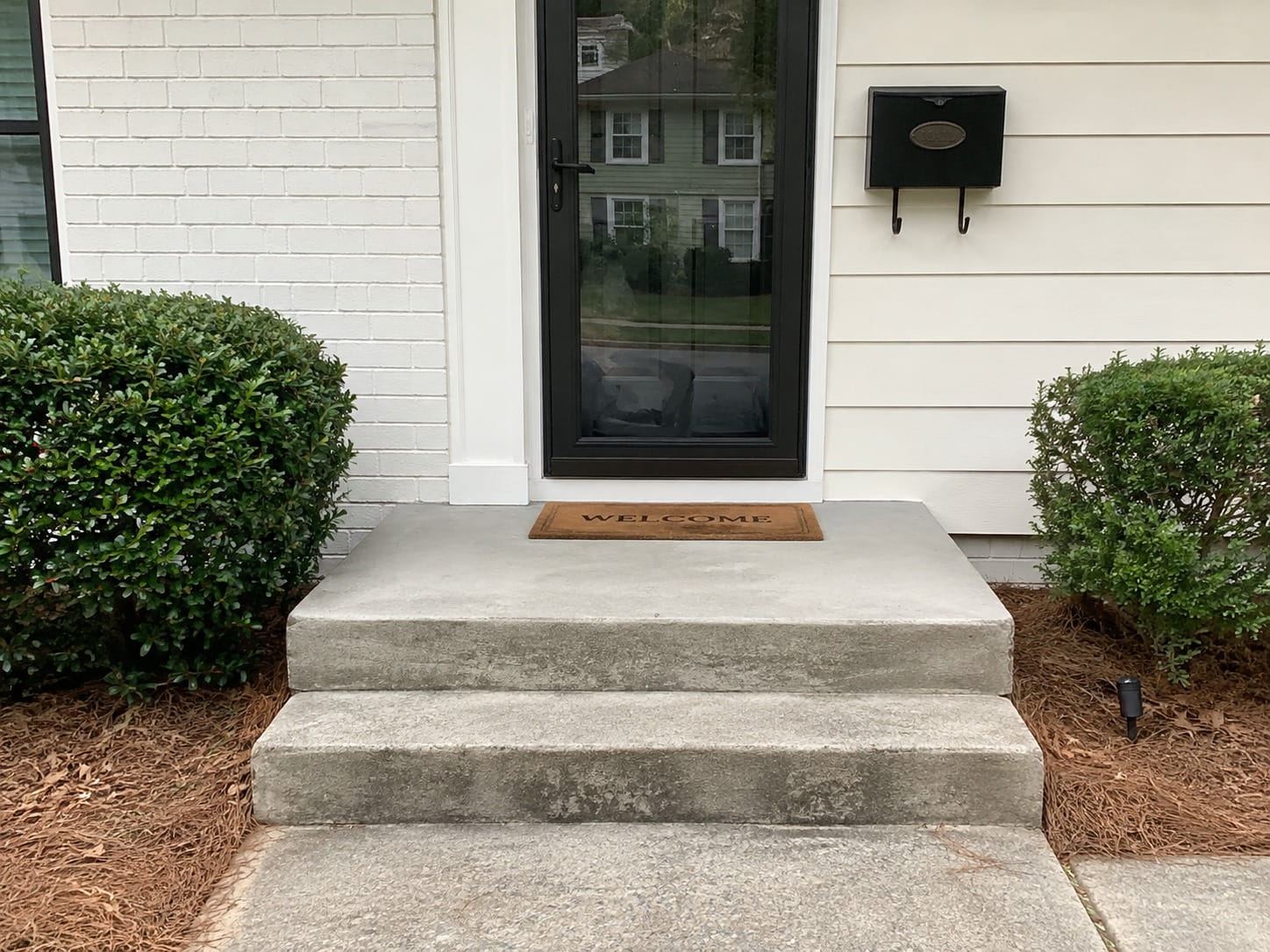
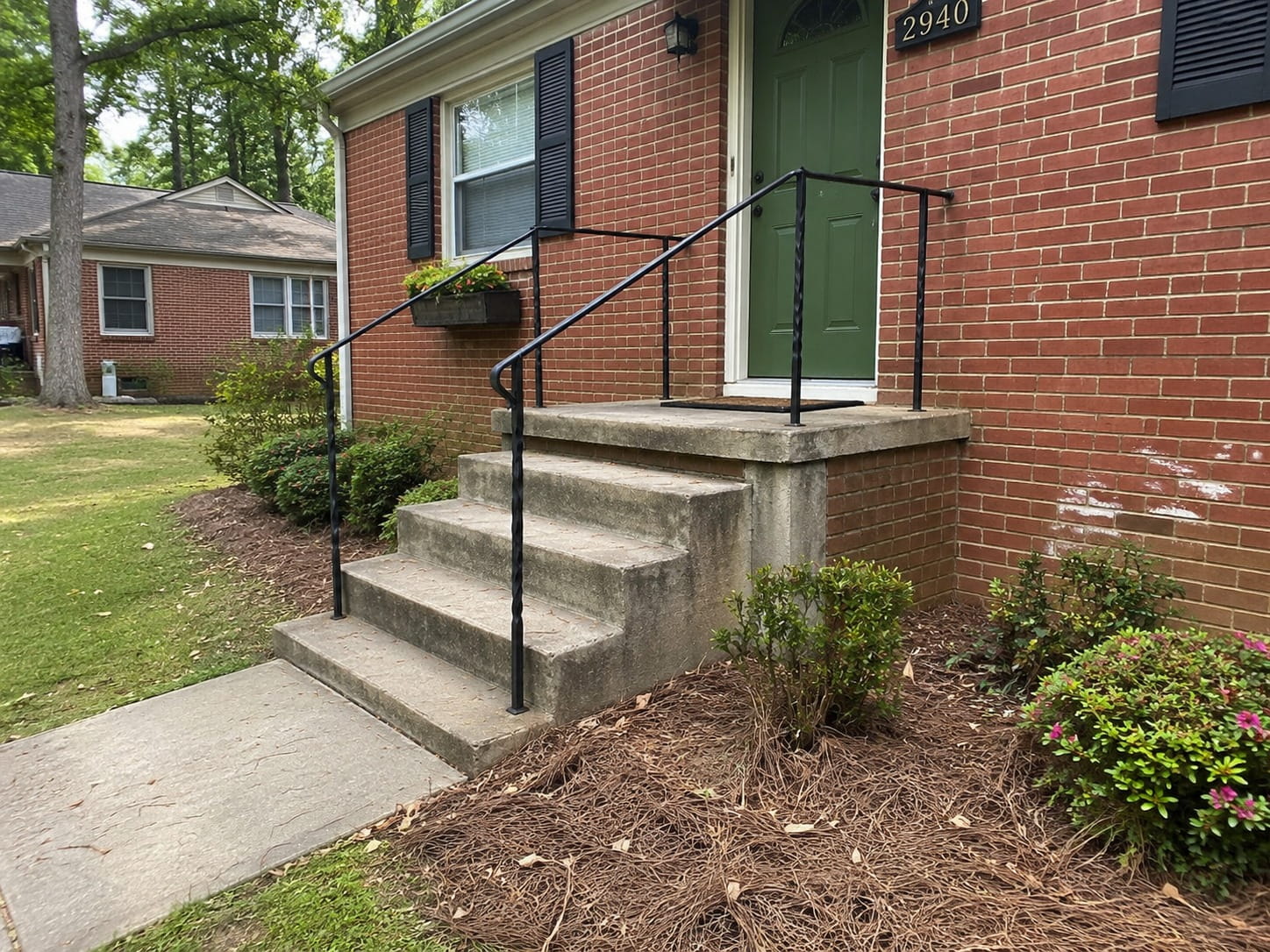
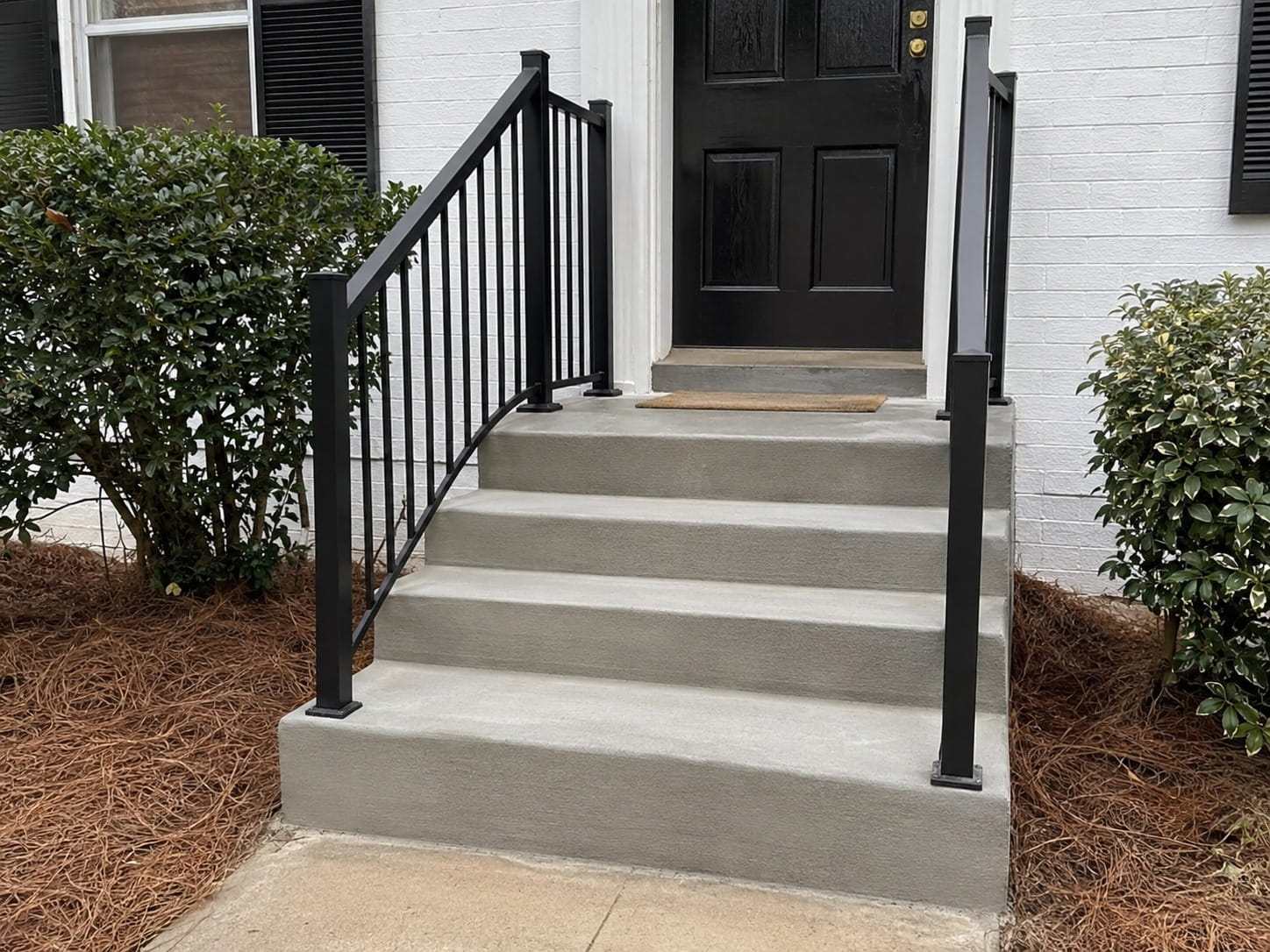
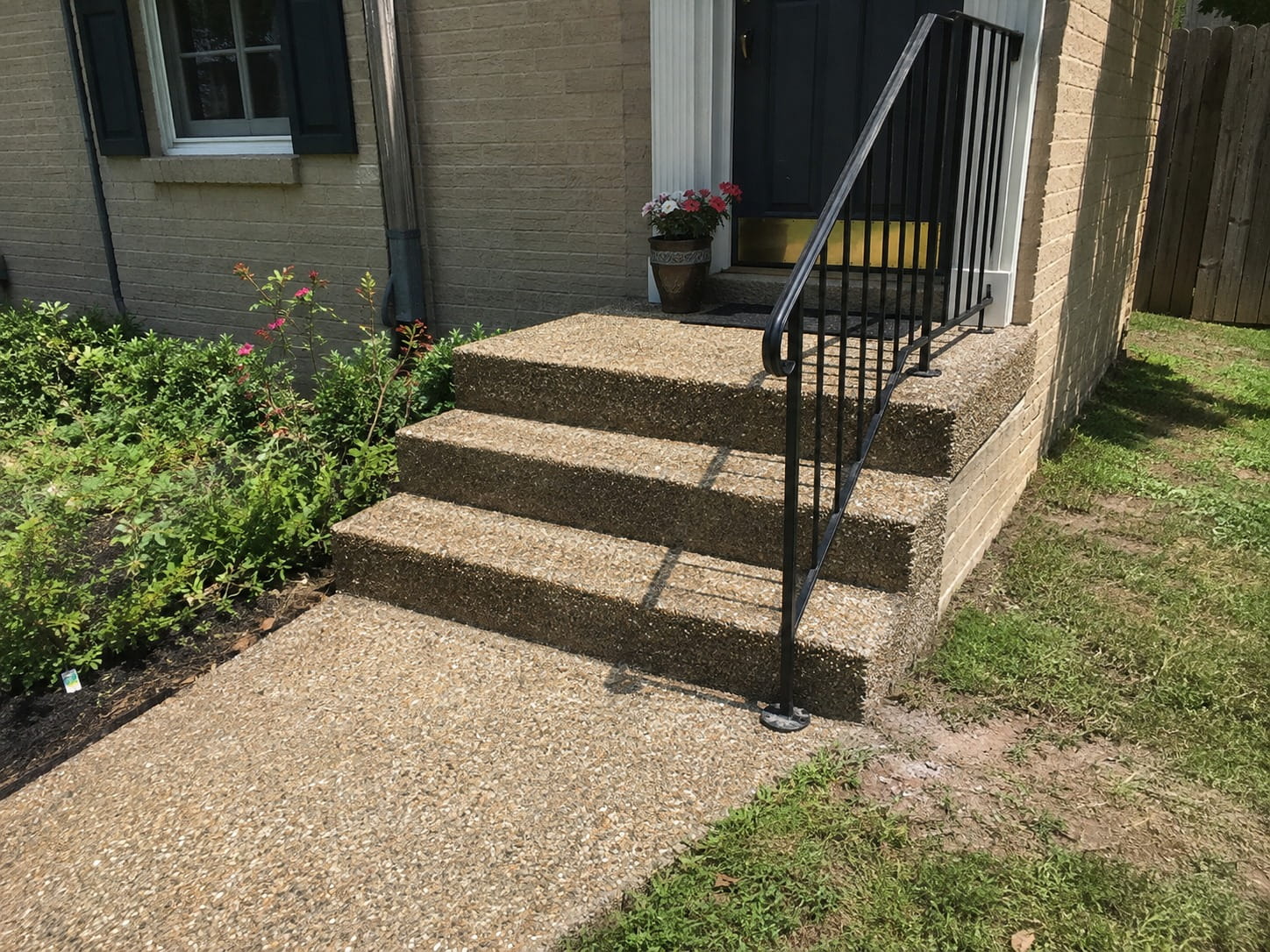
Our Concrete Steps Services in Atlanta
New flights, full replacements and targeted repairs — plus the details that keep them safe.
-
New Poured Step Flights
Complete entrances formed and poured to your door height, with risers divided evenly across the total rise and treads deep enough to take a full foot comfortably rather than the code minimum.
-
Step Replacement
Failed flights broken out and repoured on corrected ground. Where the original settled or pulled away from the house, we address the base and drainage instead of repeating the same build.
-
Stoops and Landings
Generous landings at door level that give you somewhere to stand while unlocking, and space for deliveries. Formed with a fall away from the threshold so water never sits against the door.
-
Tread and Nosing Repair
Chipped nosings, spalled surfaces and cracked treads cut back to sound concrete and rebuilt with bonding agents and repair mortar. Far cheaper than replacement when the structure itself is still good.
-
Resurfacing Tired Steps
Structurally sound but ugly flights given a new wearing surface, optionally stamped or broom-finished. Restores appearance and grip without the cost and disruption of demolition.
-
Railings and Safety Details
Core-drilled or cast-in posts set at the correct spacing and depth, plus non-slip finishes on treads. On anything above a couple of risers, a properly anchored handrail is not optional.
Why Choose Our Concrete Steps & Stoops Company in Atlanta
-
Risers Measured, Not Eyeballed
We measure total rise and divide it exactly so every riser matches. An odd step at the top or bottom is where people trip, and it is the most common fault we find on flights we are asked to replace.
-
Footings Below Unstable Fill
The ground beside a house is usually backfill, and backfill settles. We dig through it to firm bearing and pour a footing there, which is precisely the step skipped on the flights that fail.
-
Reinforced and Tied Correctly
Rebar through the flight and, where appropriate, dowels tying it to the foundation keep the steps working as one unit and stop them separating from the house as the clay moves.
-
Textured, Draining Treads
Every tread gets a broom or textured finish and a slight fall. Smooth troweled concrete looks sharp on day one and turns slippery the first time it rains, which on steps genuinely matters.
-
Cured Before You Load It
Fresh concrete gains strength over days, not hours. We tell you exactly when the steps can take foot traffic and when they are fully serviceable, rather than leaving you guessing and chipping a green edge.
-
Access Maintained Throughout
We phase work and provide a safe temporary route so you are never locked out of your own front door, and we agree that arrangement with you before the first day rather than on it.
Cost of Concrete Steps & Stoops in Atlanta
Concrete steps and stoops in Atlanta typically cost $900 to $5,000, working out around $200 to $500 per riser depending on width and landing size. Formwork is the labour-intensive part, so a curved or flared flight costs noticeably more than a straight one of the same height, and demolition of an existing flight adds $400 to $1,200.
The most common Atlanta failure is a flight that has sunk and pulled away from the house, opening a gap at the top riser. That happens because the steps were poured on backfill rather than undisturbed soil or a proper footing — loose fill keeps consolidating for years, and Georgia clay adds seasonal movement on top. Patching that gap does not fix it.
Atlanta Concrete Steps & Stoops Cost Breakdown
| Project Type | Typical Cost Range | Notes |
|---|---|---|
| Per riser, standard width | $200–$500 | Width and landing size adjust this |
| Two- to three-riser stoop | $900–$2,500 | Most common residential entry |
| Wide flight with landing | $2,500–$5,000 | Formwork drives the labour |
| Curved or flared flight | $3,500–$8,000 | Custom formwork adds significantly |
| New footing below frost depth | $700–$2,000 | Required where the old flight has settled |
| Demolition and removal | $400–$1,200 | Priced by volume carted away |
| Resurfacing existing steps | $400–$1,500 | Spalled treads and chipped nosings |
| Handrail installation | $300–$1,200 | Code-required above a set number of risers |
Please note this is only an estimate. You can get a more accurate quote when you call our team or provide specific project details in our contact form.
Concrete Steps & Stoops FAQs
How much do concrete steps cost in Atlanta?
Riser count sets the base price, then width, landing size, railings and demolition of an old flight adjust it. Formwork is the labour-intensive part, so a curved or flared flight costs noticeably more than a straight one of the same height. We quote after measuring the rise on site.
Can concrete steps be repaired, or do they need replacing?
Spalled treads, chipped nosings and cracked surfaces are all repairable with proper bonding agents and a resurfacing mortar. What cannot be patched is a flight that has settled, separated from the house or is rocking, because the footing beneath has failed. That needs rebuilding rather than filling.
Why do concrete steps sink or pull away from the house?
Because they were poured on backfill rather than on undisturbed soil or a proper footing. Loose fill around a foundation keeps consolidating for years, and Georgia clay adds seasonal movement on top. The steps then drop while the house stays put, opening that familiar gap at the top riser.
What is the code rise and run for steps in Georgia?
Georgia residential code sets a maximum riser height and a minimum tread depth, and requires every riser in a flight to be within a small tolerance of the others. Handrails become mandatory above a set number of risers. We set the flight out to those figures before building the forms.
How long before you can walk on new concrete steps?
Light foot traffic is generally fine after twenty-four to forty-eight hours once the forms come off, but keep heavy loads and furniture moves off them for a week. Full strength arrives around twenty-eight days. We tell you the specific dates, and when any railing can safely be drilled and set.