
Why Choose Our Walkway Contractors in Atlanta
-
Safety Detailing Comes First
Consistent step risers, no lipped joints and a slip-resistant surface are not optional extras on the route people use daily. We design the path around how it will actually be walked.
-
Built on a Real Base
Walkways settle for exactly the same reason patios do: shallow, poorly compacted bases. We excavate to depth and compact in lifts so the path stays flat rather than developing a wave.
-
We Work Around the Trees
Atlanta front yards are full of mature roots. We route paths thoughtfully and use flexible paver construction where roots are unavoidable, so the surface can be relaid rather than demolished.
-
Drainage Handled Deliberately
A path that channels water toward the front door or the foundation is a liability. We set falls to move water into planting or drainage, away from the house every time.
-
Materials Matched to the House
A brick path on a brick home, bluestone on a traditional facade, clean-lined pavers on a modern build. We help you choose so the walkway reads as original to the property.
-
Access Kept Open
This is the route into your home, so we phase the work and provide safe temporary access rather than leaving you climbing across excavation for a week.
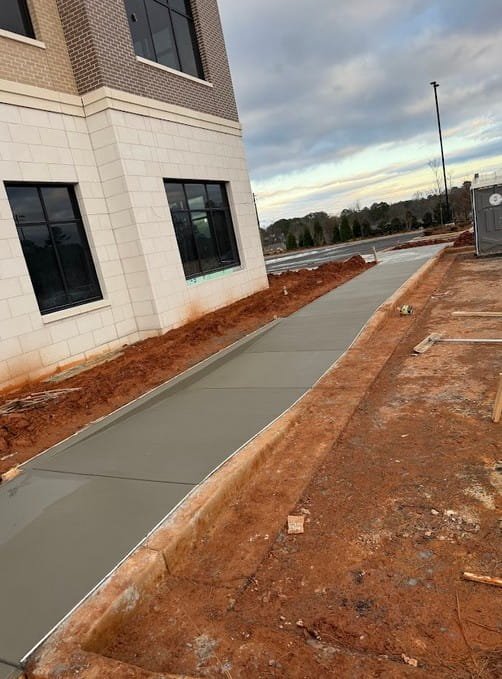
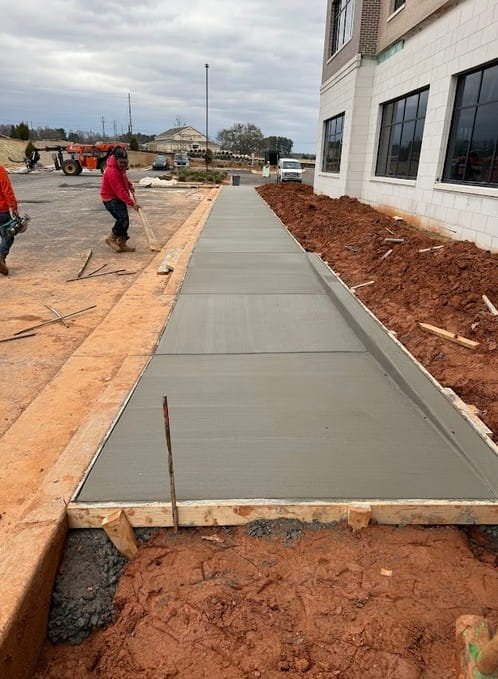
Our Walkway Work in Atlanta
6 Reasons to Install a Walkway in Atlanta
-
Kerb Appeal You Cannot Fake
The path to the door frames the entire front elevation. A well-built walkway lifts how the whole property presents, and it is the detail that photographs first in any listing.
-
Remove a Real Trip Hazard
Cracked, lifted or uneven paths are where household accidents actually happen, particularly after dark or in rain. Replacing one is as much a safety decision as an aesthetic one.
-
Stop Wearing Out the Lawn
People take the shortest route. Where there is no path there is a worn dirt track that turns to mud through Atlanta’s wet months. A proper walkway just solves that permanently.
-
Protect the Foundation
A path built with correct fall carries roof and surface runoff away from the house rather than letting it pool along the wall where it can find its way toward footings.
-
Connect the Whole Property
Paths link the drive, front door, side gate and back garden into one coherent layout, which makes a property feel considered rather than a set of disconnected areas.
-
Low Maintenance For Decades
Brick, stone and paver walkways need almost nothing beyond occasional sweeping and joint topping, and individual units can be lifted and reset if a root ever moves one.
6 Qualities of a Good Walkway Expert in Atlanta
-
They Walk the Route With You
Where does the path start, curve and finish? Where do people actually cut across? A contractor who walks it with you designs a path that gets used as intended.
-
They Take Steps Seriously
Inconsistent riser heights are the leading cause of stumbles. A professional measures and sets uniform risers rather than eyeballing them to fit whatever the slope gives.
-
They Ask About Lighting
Conduit for path lighting is trivial to lay during construction and disruptive to add afterwards. Raising it before excavation is the mark of someone thinking a step ahead.
-
They Have a Plan for Roots
Cutting major roots can kill a mature Atlanta tree and invites future lifting. A good contractor discusses routing around, bridging over, or accepting a flexible surface instead.
-
They Specify the Surface
Smooth, sealed stone gets treacherous in Georgia rain. Someone recommending a textured or riven finish for a walkway is thinking about how it performs wet, not just how it photographs.
-
They Are Licensed and Insured
Work on the main pedestrian approach to your home carries liability. Confirm licensing and insurance before anyone starts, particularly where steps and level changes are involved.
Cost of Walkways in Atlanta
Walkways in Atlanta typically cost $12 to $35 per square foot installed, putting a standard front path between $1,800 and $6,000. Concrete pavers sit at the affordable end and natural stone at the premium end, with brick in between. Length, width and whether steps or level changes are involved drive the total more than material choice alone.
Near Atlanta’s mature trees, paver and stone construction repays its premium over poured concrete. Roots lift any surface eventually, but individual units can be lifted, the base regraded and the surface reset in half a day, where a cracked concrete path has to be broken out and repoured entirely. Polished stone is worth avoiding outdoors here — it turns slippery in our rainfall.
Atlanta Walkways Cost Breakdown
| Project Type | Typical Cost Range | Notes |
|---|---|---|
| Concrete paver walkway | $12–$24 per sq ft | Best balance of cost, grip and repairability |
| Clay brick walkway | $16–$30 per sq ft | Suits traditional and historic homes |
| Natural stone walkway | $22–$45 per sq ft | Riven or textured finish, never polished |
| Poured concrete path | $8–$16 per sq ft | Most economical; cracks near tree roots |
| Typical front path (100 sq ft) | $1,800–$4,500 | Two to four days including base work |
| Steps within a walkway | $300–$800 per riser | Consistent risers and landings on slopes |
| Retaining edge on a sloped run | $40–$100 per linear ft | Holds ground on steeper approaches |
| Lighting conduit (rough-in) | $300–$1,200 | Far cheaper laid before the surface goes down |
Please note this is only an estimate. You can get a more accurate quote when you call our team or provide specific project details in our contact form.
Walkways FAQs
What is the best material for a walkway in Atlanta?
Concrete pavers offer the best balance of cost, grip and repairability. Brick suits traditional and historic homes beautifully. Natural stone looks superb but costs more and should be a riven or textured finish rather than polished, which turns dangerously slippery under the heavy rain we get here.
How much does a new walkway cost in Atlanta?
Pricing is driven by length, width, material and whether steps or level changes are involved. A straight paver path is the most economical option; a curving natural stone walkway with steps costs considerably more. We measure on site and quote itemised, so base and surface are priced separately.
How long does walkway installation take?
A straightforward front path is usually completed in two to four days including excavation, base compaction, laying and jointing. Adding steps, retaining edges or lighting conduit extends that. We keep safe access to your door available throughout the work, which matters on a main entrance in daily use.
Can you build a walkway on a sloped yard?
Yes, and it is common across Atlanta. Depending on the gradient we either grade the path to a comfortably walkable slope or introduce steps with consistent risers and landings. Steeper approaches sometimes need small retaining edges to hold the ground, which we design in from the start.
Will tree roots damage my new walkway?
They can over time, which is exactly why paver and stone construction is the sensible choice near mature trees. Individual units can be lifted, the base regraded and the surface reset, which is a straightforward repair compared with breaking out and repouring a cracked concrete path entirely.